
Executive Summaryyyyyy
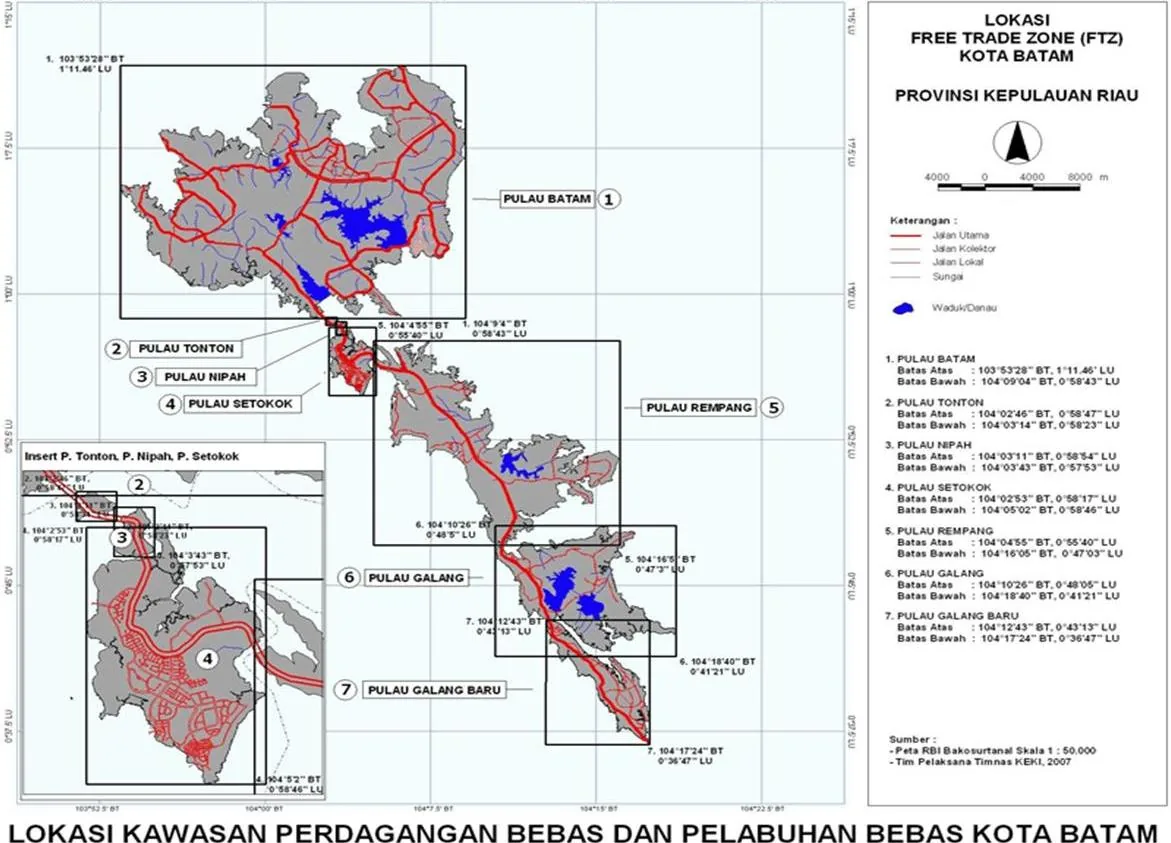
- Batam is one of Indonesia’s most important Free Trade Zone areas, offering strategic access to Singapore, ASEAN supply chains, and international shipping routes.
- The Free Trade Zone regime generally provides customs and indirect tax facilities for qualifying movement of goods, including import duty, VAT, and luxury-goods tax relief under applicable FTZ rules.
- Batam is managed by BP Batam, while company registration and business licensing are integrated with Indonesia’s OSS risk-based licensing system.
- Foreign investors commonly establish a PT PMA in Batam, subject to Indonesia’s foreign investment rules, KBLI business classification, capital requirements, and licensing obligations.
- Investors should distinguish between goods used inside the FTZ, goods exported from the FTZ, and goods moved from Batam into other Indonesian customs areas.
- Standard Indonesian corporate income tax, withholding tax, payroll tax, accounting, employment, and reporting obligations continue to apply unless a specific facility or exemption is available.
- Batam is attractive for manufacturing, electronics, shipbuilding, logistics, aviation MRO, digital services, and export-oriented industries.
- The main investor risks are incorrect licensing, weak customs documentation, misunderstanding FTZ VAT treatment, underestimating employment compliance, and failing to maintain proper tax and accounting records.
Main Discussion
Understanding Batam’s Free Trade Zone Status
Batam is part of Indonesia’s Free Trade Zone framework and has long been developed as a manufacturing, logistics, and export-oriented investment hub. Its location near Singapore gives it a practical advantage for regional supply chains, international trade, and businesses that require access to ports, airports, industrial estates, and skilled manufacturing labor.
In practical terms, the Batam Free Trade Zone is designed to make the movement of goods more efficient and cost-effective. Goods imported into Batam for qualifying FTZ activities may benefit from customs and indirect tax facilities, provided the company follows the applicable licensing, customs, and documentation procedures.
However, the FTZ status does not mean that all taxes and regulations disappear. Companies operating in Batam remain subject to Indonesian company law, corporate income tax, withholding tax, employment law, accounting requirements, and administrative reporting obligations.
Why Batam Matters for Investors
Batam is attractive because it combines several commercial advantages:
| Advantage | Practical Meaning for Investors |
|---|---|
| Strategic location | Close to Singapore, Malaysia, and major regional shipping lanes |
| FTZ facilities | Potential relief from import duty, VAT, and luxury-goods tax for qualifying goods movement |
| Industrial ecosystem | Established manufacturing, electronics, shipbuilding, logistics, and MRO clusters |
| Infrastructure | Ports, airport access, industrial estates, utilities, and business support services |
| Indonesian market access | Possible gateway for companies serving both export markets and the Indonesian domestic market |
| Cost competitiveness | Generally lower operating and labor costs compared with Singapore |
Batam is especially relevant for investors whose business model involves importing raw materials, components, or machinery; processing, assembling, or manufacturing in Batam; and then exporting finished goods or distributing them regionally.
Key Legal and Institutional Framework
Batam’s FTZ framework is supported by Indonesian laws and government regulations on free trade zones, investment, customs, and business licensing. BP Batam acts as the key local authority for the Batam FTZ, while OSS is used for risk-based licensing and company registration processes.
For investors, the most important authorities are:
| Authority | Role |
|---|---|
| BP Batam | FTZ authority, investment facilitation, licensing coordination, land and infrastructure-related matters |
| OSS / Ministry of Investment | Online company and business licensing system |
| Directorate General of Customs and Excise | Customs supervision for goods entering and leaving the FTZ |
| Directorate General of Taxes | Tax registration, corporate income tax, withholding tax, VAT administration, and tax compliance |
| Ministry of Manpower | Employment, foreign worker, and labor compliance |
| BPJS Kesehatan and BPJS Ketenagakerjaan | Mandatory social security registration and contribution compliance |
Company Setup in Batam
Foreign investors typically use a PT PMA structure when establishing a company in Batam. The exact requirements depend on the business activity, KBLI classification, foreign ownership rules, risk level under OSS, and sector-specific regulations.
A typical setup process includes:
- Selecting the correct KBLI business classification.
- Checking foreign ownership limitations and investment requirements.
- Preparing the company deed and shareholder structure.
- Registering the company through OSS and obtaining the NIB.
- Securing the correct business licenses based on the company’s activities.
- Arranging a physical office or operating location in Batam.
- Completing tax, customs, employment, and BPJS registrations.
- Preparing accounting, payroll, invoicing, and compliance systems before operations begin.
For manufacturing or industrial activities, additional approvals may be required, including industrial business licenses, environmental approvals, location or estate-related approvals, and customs-related access.
Physical Office and Operating Presence
A real business presence is important in Batam. Investors should prepare a proper office, factory, warehouse, or operational site that matches the company’s licensed activity. A physical address is commonly required for incorporation, licensing, tax registration, and operational verification.
In practice, investors should prepare:
- Lease agreement or ownership documents
- Building or location information
- Domicile or address support documents where required
- Photos or site evidence if requested
- Industrial estate confirmation, if operating inside an industrial park
- Environmental documents if the business activity requires them
Using an unsuitable address can create practical problems during licensing, bank account opening, tax registration, or field verification.
FTZ Tax and Customs Treatment
The main benefit of the Batam FTZ is the customs and indirect tax treatment for qualifying goods movement. In general, goods brought from outside Indonesia into Batam for FTZ purposes may benefit from import duty, VAT, and luxury-goods tax relief, subject to the applicable rules and documentation.
The key distinction is the direction and purpose of goods movement:
| Movement of Goods | General Practical Treatment |
|---|---|
| From overseas into Batam FTZ | May qualify for FTZ customs and indirect tax facilities |
| From Batam FTZ to overseas | Generally treated as export movement |
| From Batam FTZ to other Indonesian customs areas | May trigger import duty, VAT, and other tax/customs obligations |
| Within Batam FTZ | Treatment depends on the type of goods, parties, transaction, and applicable FTZ rules |
Companies should maintain strong customs records, including import declarations, export documents, invoices, packing lists, bills of lading, inventory records, and proof of goods movement. Weak documentation may cause tax or customs exposure during audit.
Corporate Income Tax Still Applies
Batam FTZ facilities mainly affect customs and indirect taxes on qualifying goods movement. They do not automatically exempt companies from corporate income tax.
Companies in Batam generally remain subject to:
| Tax Area | Practical Impact |
|---|---|
| Corporate income tax | Taxable profit is subject to Indonesian corporate income tax rules |
| Withholding tax | Payments such as rent, services, royalties, interest, and dividends may require withholding |
| Employee income tax | Payroll must comply with PPh 21 rules |
| VAT administration | VAT treatment must be analyzed based on transaction type and location |
| Annual tax return | Companies must file annual corporate income tax returns |
| Bookkeeping | Proper accounting records must be maintained in accordance with Indonesian requirements |
Some investors may also qualify for national investment incentives, such as tax allowance, tax holiday, or other sector-based facilities. Eligibility should be reviewed separately because these incentives are not automatically granted merely because the company is located in Batam.
Licensing and Compliance Process
A Batam investor should approach licensing in a structured way. The key issue is not only obtaining the NIB, but ensuring that the company’s actual activity matches its KBLI, risk classification, operational location, and supporting permits.
A practical licensing review should cover:
| Area | What to Check |
|---|---|
| KBLI classification | Whether the selected business field properly reflects the actual activity |
| Foreign ownership | Whether the activity is open to foreign investment |
| Risk-based license | Whether the required license is automatic, standard certificate, or approval-based |
| Industrial approval | Whether manufacturing or processing requires industrial licensing |
| Environmental approval | Whether AMDAL, UKL-UPL, or SPPL is required |
| Customs access | Whether the company needs customs registration or specific access for import/export |
| Location | Whether the office, warehouse, or factory location is permitted for the activity |
Investors should avoid starting commercial operations before the required licenses and supporting registrations are properly completed.
Main Industries in Batam
Batam has developed strong industrial clusters over several decades. The most common investor sectors include:
| Sector | Why Batam Is Relevant |
|---|---|
| Electronics and components | Established supply chain, skilled labor, and export-oriented production base |
| Shipbuilding and offshore | Waterfront access, yards, heavy fabrication, and maritime support services |
| Logistics and warehousing | Port access and proximity to Singapore |
| Aviation MRO | Hang Nadim Airport area and aviation-related industrial development |
| Oil and gas support | Fabrication, repair, and support services for regional projects |
| Digital and technology services | Growing digital ecosystem, including special development areas |
| General manufacturing | Duty and VAT facilities may improve cost structure for import-processing-export models |
Batam is generally most attractive where the business model benefits from cross-border movement of goods, regional logistics, export markets, or proximity to Singapore.
Practical Example
Assume a foreign electronics manufacturer wants to establish a production facility in Batam. The company imports components from several countries, assembles finished products in Batam, and exports most of the finished goods to customers outside Indonesia.
A practical structure may look like this:
| Step | Practical Action |
|---|---|
| 1 | Establish a PT PMA with the correct manufacturing KBLI |
| 2 | Lease a factory or production space in an appropriate industrial area |
| 3 | Obtain NIB and required OSS-based business licenses |
| 4 | Complete customs and tax registration |
| 5 | Import machinery and components under the applicable FTZ procedures |
| 6 | Maintain inventory and production records to support customs compliance |
| 7 | Export finished goods and retain complete export documentation |
| 8 | File corporate income tax, withholding tax, payroll tax, and other required reports |
The commercial benefit is that the company may reduce cash-flow burden and production cost through FTZ facilities on qualifying imports, while using Batam as a cost-effective production and export base.
Common Investor Mistakes
Investors should pay special attention to the following issues:
| Mistake | Why It Matters |
|---|---|
| Selecting the wrong KBLI | Can cause licensing mismatch and operational restriction |
| Assuming all Batam transactions are tax-free | FTZ treatment depends on transaction type and goods movement |
| Weak customs documentation | May create import duty, VAT, and customs audit exposure |
| No real operating address | Can create licensing, tax, and banking difficulties |
| Starting operations before licenses are complete | May result in administrative sanctions or business disruption |
| Ignoring withholding tax | Service, rental, royalty, interest, and dividend payments may require withholding |
| Poor inventory tracking | FTZ businesses need strong records for goods entering and leaving the zone |
| Underestimating employment compliance | Payroll tax, BPJS, minimum wage, and foreign worker rules still apply |
Documents Commonly Needed
Although requirements vary by business activity, investors commonly need the following documents:
| Document | Purpose |
|---|---|
| Shareholder and director documents | Company establishment and compliance |
| Deed of establishment and company approval | Legal incorporation |
| NIB and OSS licenses | Business registration and operational authorization |
| Lease agreement or property documents | Proof of physical office, factory, or warehouse |
| Tax registration documents | Corporate tax compliance |
| Customs and import/export documents | FTZ goods movement compliance |
| Environmental approval documents | Required for activities with environmental impact |
| Employment and BPJS registration | Payroll and social security compliance |
| Accounting and inventory records | Tax, customs, and financial reporting support |
Practical Investor Considerations
Batam can be very attractive, but the business case should be tested before investment. Investors should evaluate:
- Whether the product or service truly benefits from FTZ treatment.
- Whether most sales will be export sales or domestic Indonesian sales.
- Whether the company needs a factory, warehouse, trading office, or service office.
- Whether local suppliers and labor are sufficient for the business model.
- Whether the company can maintain proper customs and inventory documentation.
- Whether investment incentives beyond FTZ facilities may be available.
- Whether the tax structure is efficient for dividends, royalties, management fees, and intercompany charges.
Investors should also compare Batam with other Indonesian locations and ASEAN alternatives. Batam is not always the cheapest location, but it can be highly competitive when logistics, Singapore proximity, FTZ facilities, and industrial infrastructure are important.
Professional Support Areas
Investors usually need coordinated support across legal, tax, accounting, licensing, employment, and customs areas. For Batam projects, professional review is especially useful for:
- Company structure and KBLI selection
- PT PMA establishment
- OSS and BP Batam licensing
- Tax registration and tax treatment analysis
- Customs and FTZ documentation
- Accounting and inventory control setup
- Payroll, BPJS, and employment compliance
- Review of investment incentives
- Ongoing monthly and annual compliance
A well-planned setup reduces the risk of licensing delays, incorrect tax treatment, customs exposure, and operational disruption after the company starts doing business.